
If you or someone you know is struggling with substance use or in crisis, help is available. Call or text 988 to reach the 988 Suicide & Crisis Lifeline, available 24/7. For substance use treatment referrals, call SAMHSA’s National Helpline at 1-800-662-HELP (4357).
Why do some people develop substance use disorders while others don’t? It’s one of the most important questions in behavioral health — and the answer is more nuanced than most people realize.
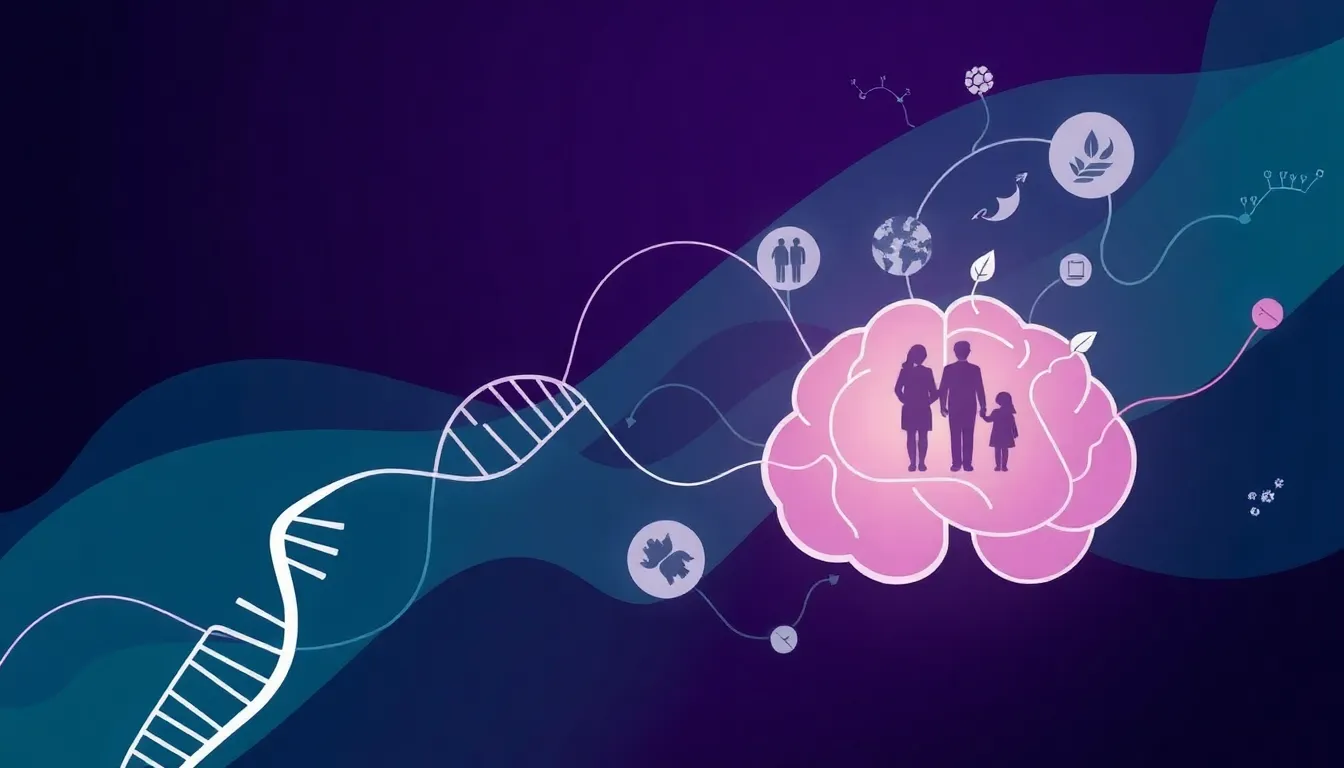
Addiction isn’t a matter of willpower or moral character. It’s a complex medical condition shaped by genetics, environment, mental health, and the timing of first exposure. Substance use disorder affects millions of Americans across every demographic, income level, and geography.
Understanding risk factors doesn’t predict who will develop a substance use disorder — but it does identify who is most vulnerable and where prevention efforts can have the greatest impact.
Addiction Is Not a Choice: Understanding the Disease Model
Before examining specific risk factors, it’s important to establish what science has made clear: substance use disorder is a chronic brain condition, not a moral failure.
The National Institute on Drug Abuse (NIDA) defines addiction as “a chronic, relapsing disorder characterized by compulsive drug seeking, continued use despite harmful consequences, and long-lasting changes in the brain.” These brain changes affect the reward system, stress response, and decision-making circuits — making it progressively harder to stop using even when the person wants to.
This matters because the disease model reframes risk factors correctly. We don’t ask why someone “chose” to develop diabetes — we examine the genetic predispositions, dietary patterns, and environmental factors that contributed. The same framework applies to substance use disorders.
SAMHSA emphasizes a “whole-patient” approach to treatment that combines medication with counseling and behavioral therapies, recognizing that substance use disorders have biological, psychological, and social dimensions (SAMHSA, 2025).
Genetic Risk Factors: The Role of Family History
Genetics account for an estimated 40–60% of a person’s vulnerability to substance use disorders, according to decades of twin, family, and adoption studies. This doesn’t mean addiction is predetermined — but it does mean some people start with a higher baseline risk.
What we know about genetic risk:
- Family history is the single strongest predictor. Having a first-degree relative (parent or sibling) with a substance use disorder increases your risk 4 to 8 times compared to someone without family history
- The risk is not substance-specific. A parent’s alcohol use disorder increases a child’s risk for all substance use disorders, not just alcohol — suggesting shared genetic pathways for addiction vulnerability
- Hundreds of genes contribute. There is no single “addiction gene.” Instead, many genes collectively influence how the brain processes reward, manages stress, and metabolizes substances
- Genetic risk interacts with environment. A person with high genetic risk who grows up in a stable, supportive environment may never develop a problem. Conversely, someone with lower genetic risk exposed to severe trauma and early substance access may
The practical takeaway: if substance use disorders run in your family, you’re not destined to develop one — but you should approach substance use with greater awareness and caution.
Environmental Triggers: Trauma, Stress, and Access
Environment shapes whether genetic vulnerability becomes clinical reality. Several environmental factors consistently emerge in the research:
Adverse childhood experiences (ACEs)
The CDC-Kaiser ACE study — one of the largest investigations of childhood abuse and neglect — found a dose-response relationship between adverse childhood experiences and later substance use. Each additional ACE increases the risk:
- Children who experience 4+ ACEs are 4 to 12 times more likely to develop alcohol or drug use problems as adults
- Types of ACEs that increase risk include physical, emotional, or sexual abuse; neglect; household dysfunction (parental substance use, domestic violence, incarceration); and parental mental illness
Chronic stress
Ongoing stress — poverty, discrimination, job insecurity, housing instability, caregiving burden — depletes the same neurological resources that protect against substance use. When the brain’s stress response system is chronically activated, substances that temporarily suppress that activation become powerfully reinforcing.
Low-income populations face higher risk for both substance use disorders and the conditions that drive them — limited access to healthcare, higher exposure to environmental stressors, and fewer resources for healthy coping.
Substance availability and social norms
Access matters. Communities where substances are readily available — through prescribing patterns, retail density, or social networks — see higher rates of use and disorder. The opioid epidemic was initially driven not by “bad choices” but by dramatic increases in prescription opioid availability during the late 1990s and 2000s.
Social norms also play a role. In environments where heavy drinking or drug use is normalized — certain college cultures, high-stress industries, social circles — the threshold for problematic use drops.
Age of First Use: Why Early Exposure Matters
The age at which a person first uses a substance is one of the strongest predictors of whether they’ll develop a disorder:
- People who begin drinking before age 15 are 4 times more likely to develop alcohol dependence than those who start at 21
- 90% of people with substance use disorders began using before age 18
- The adolescent brain is uniquely vulnerable because the prefrontal cortex (responsible for impulse control and decision-making) doesn’t fully mature until the mid-20s
This isn’t about blame — it’s about neurodevelopmental reality. Adolescent brains are wired for novelty-seeking and reward sensitivity while the braking system (prefrontal cortex) is still under construction. Substances introduced during this window can fundamentally alter brain development.
This is why prevention efforts targeting adolescents — delaying first use — have outsized impact compared to interventions later in life.
Mental Health as a Risk Factor: The Co-Occurring Connection
Mental health conditions and substance use disorders are deeply intertwined. The relationship runs in both directions:
- Mental health conditions increase substance use risk: People with depression, anxiety, PTSD, bipolar disorder, or ADHD are 2 to 4 times more likely to develop substance use disorders. Many use substances to self-medicate — alcohol to quiet anxiety, stimulants to manage ADHD, opioids to numb emotional pain
- Substance use worsens mental health: Chronic substance use alters brain chemistry in ways that create or deepen depression, anxiety, and psychosis. What started as self-medication becomes a second disorder
SAMHSA’s 2024 National Survey on Drug Use and Health data consistently shows that opioid use disorder prevalence and alcohol use disorder data are highest among individuals with co-occurring mental health conditions (SAMHSA, 2024).
The clinical term is “co-occurring disorders” or “dual diagnosis.” Research shows that integrated treatment — addressing both the substance use disorder and the mental health condition simultaneously — produces far better outcomes than treating either one alone.
Protective Factors That Reduce Risk
Risk factors don’t operate in a vacuum. Protective factors can buffer against even significant vulnerability:
Individual protective factors:
- Strong executive function and impulse control
- Problem-solving and coping skills
- Sense of purpose or meaning
- Physical health and regular exercise
- Awareness of family history and personal risk
Relationship protective factors:
- Stable, supportive family relationships
- Positive peer group with healthy norms
- At least one reliable, caring adult during childhood
- Healthy romantic partnerships in adulthood
Community protective factors:
- Access to quality education
- Access to mental health and substance use treatment
- Community norms that discourage heavy substance use
- Economic opportunity and stable housing
- Faith or community organizations that provide belonging
The NIMH and NAMI both emphasize that treatment access is itself a protective factor — communities with available, affordable treatment see lower rates of chronic substance use disorder (NIMH, 2024; NAMI, 2024).
Substance use statistics in California and other large states illustrate how these protective and risk factors vary dramatically by geography, creating wide disparities in prevalence and treatment access.
When to Seek Help: Recognizing Early Warning Signs
Substance use exists on a spectrum. Not everyone who drinks or uses drugs develops a disorder. But certain patterns signal that use has crossed from recreational to problematic:
Early warning signs:
- Using more than intended or for longer than planned
- Unsuccessful attempts to cut back or stop
- Spending increasing amounts of time obtaining, using, or recovering from substances
- Cravings or strong urges to use
- Continued use despite problems at work, school, or home
- Giving up activities you used to enjoy in favor of substance use
- Using in physically hazardous situations (driving, operating machinery)
- Developing tolerance (needing more to achieve the same effect)
- Experiencing withdrawal symptoms when not using
If you recognize these patterns in yourself or someone you know, help is available:
- SAMHSA National Helpline: 1-800-662-4357 (free, confidential, 24/7)
- SAMHSA Treatment Locator: findtreatment.gov
- 988 Suicide and Crisis Lifeline: Call or text 988
SAMHSA reports that FDA-approved medications for both alcohol use disorder and opioid use disorder, combined with behavioral therapy, can “successfully treat SUDs and help sustain recovery” (SAMHSA, 2025). Treatment improves survival rates, employment, and quality of life. The first step is reaching out.
Frequently Asked Questions
Can you be genetically predisposed to addiction?
Yes. Research consistently shows that genetics account for 40–60% of vulnerability to substance use disorders. Having a first-degree relative with an addiction increases your risk 4 to 8 times. However, genetics are not destiny — they represent vulnerability, not certainty. Environmental factors, personal choices, and access to support all influence whether genetic risk translates into a clinical disorder.
What is the single biggest risk factor for substance use disorder?
Family history of substance use disorder is the single strongest predictor, due to both genetic and environmental transmission. However, adverse childhood experiences (ACEs) — particularly when multiple types co-occur — rival family history in predictive power. In practice, most people who develop substance use disorders have multiple overlapping risk factors, not just one.
Does mental illness cause addiction?
Mental illness doesn’t directly cause addiction, but it significantly increases the risk. People with depression, anxiety, PTSD, and bipolar disorder are 2 to 4 times more likely to develop a substance use disorder, often because they use substances to self-medicate. The relationship is bidirectional — substance use also worsens mental health conditions. Integrated treatment that addresses both conditions simultaneously produces the best outcomes.
At what age are people most vulnerable to developing addiction?
Adolescence and young adulthood (ages 12–25) represent the highest-risk window. The brain’s reward system matures faster than its impulse-control system during this period, creating a neurological mismatch that increases vulnerability to substance use. People who begin using before age 15 are 4 times more likely to develop dependence than those who start at 21. Delaying first use is one of the most effective prevention strategies.
Can substance use disorder be prevented?
While no intervention can eliminate risk entirely, several strategies significantly reduce it: delaying first use past adolescence, treating co-occurring mental health conditions early, building strong family and community connections, maintaining awareness of family history, and ensuring access to treatment when problems emerge. Community-level prevention — including limiting substance availability, enforcing minimum age laws, and reducing prescribing of addictive medications — has demonstrated measurable impact at scale.
Sources
-
Substance Abuse and Mental Health Services Administration. Substance use disorder treatment options. SAMHSA; Updated August 2025. https://www.samhsa.gov/substance-use/treatment/options
-
Substance Abuse and Mental Health Services Administration. 2024 NSDUH releases. SAMHSA; 2024. https://www.samhsa.gov/data/data-we-collect/nsduh-national-survey-drug-use-and-health/national-releases/2024
-
National Institute of Mental Health. Mental illness statistics. NIMH; 2024. https://www.nimh.nih.gov/health/statistics/mental-illness
-
Centers for Disease Control and Prevention. Provisional drug overdose death counts. CDC NCHS; 2024. https://www.cdc.gov/nchs/nvss/vsrr/drug-overdose-data.htm
-
Centers for Disease Control and Prevention. Understanding the opioid overdose epidemic. CDC; 2024. https://www.cdc.gov/overdose-prevention/about/understanding-the-opioid-overdose-epidemic.html
-
National Alliance on Mental Illness. Mental health by the numbers. NAMI; 2024. https://www.nami.org/mental-health-by-the-numbers/
-
World Health Organization. Mental disorders — fact sheet. WHO; 2024. https://www.who.int/news-room/fact-sheets/detail/mental-disorders
-
Substance Abuse and Mental Health Services Administration. SAMHSA data homepage. SAMHSA; 2024. https://www.samhsa.gov/data/