
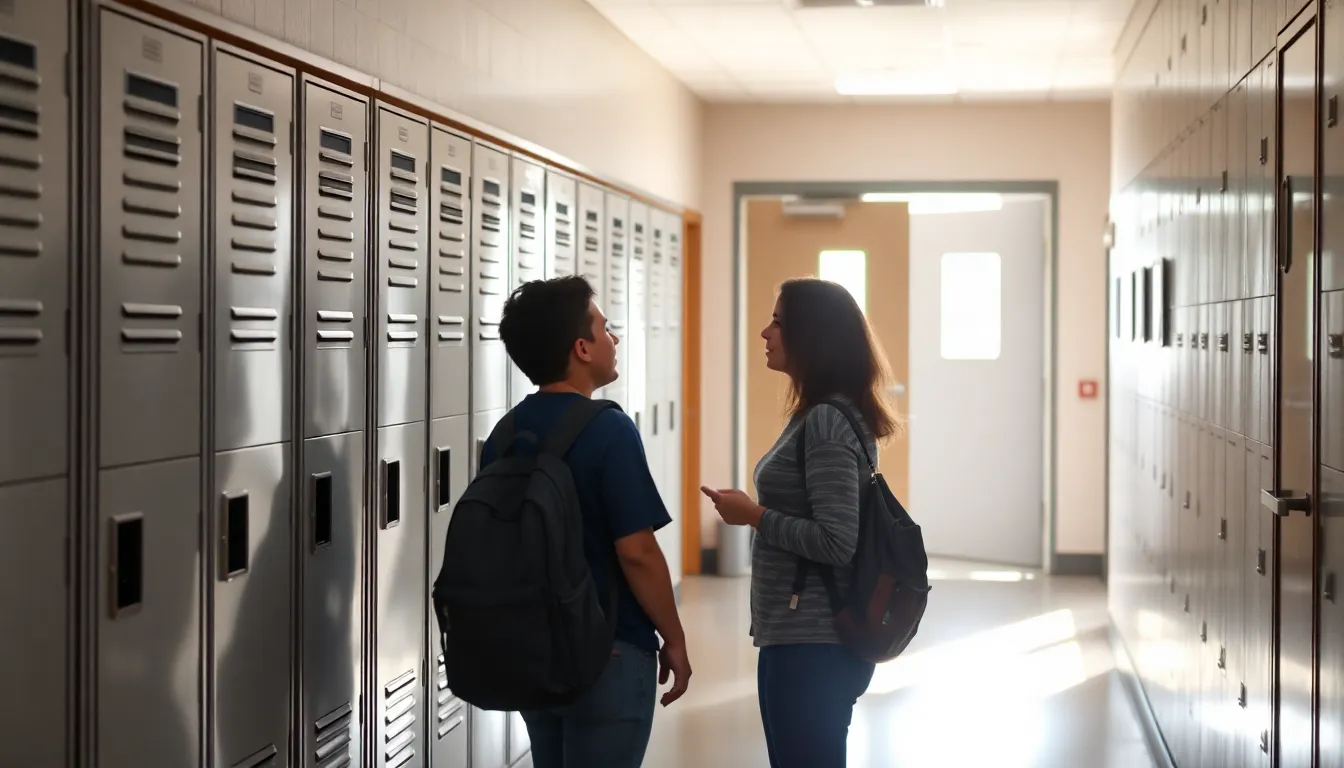
The youth mental health crisis didn’t start in schools — but schools are where it shows up every day. When 40% of high school students report persistent feelings of sadness or hopelessness, the impact on classrooms, academic performance, and school culture is impossible to ignore (CDC, 2024).
Schools are responding — but the responses vary dramatically in scope, funding, and effectiveness. Some districts have built comprehensive mental health infrastructure with universal screening, embedded therapists, and social-emotional learning curricula. Others are still relying on a single overworked school counselor serving 500+ students.
Teens experiencing mental health challenges represent a growing share of the student population. This guide examines what schools are actually doing, what works according to the evidence, and what parents can push for.
The Youth Mental Health Crisis: A School-Level View
CDC’s 2023 Youth Risk Behavior Survey provides the clearest snapshot (CDC, 2024):
- 40% of students reported persistent feelings of sadness or hopelessness — an increase over the past decade
- 53% of female students experienced these feelings, compared to 28% of male students
- 65% of LGBTQ+ students reported persistent sadness or hopelessness
- 20% of students seriously considered attempting suicide
- 13% of female students and 20% of LGBTQ+ students attempted suicide
These aren’t abstract numbers — they represent students sitting in classrooms right now. Children’s mental health data shows that many conditions emerge even earlier, during elementary school years, making early intervention critical.
Schools are uniquely positioned to help because they see students every day for years. They can detect changes in behavior, provide early intervention, and connect families with resources. But they can only do this if they have the infrastructure, training, and funding.
The School Counselor Shortage
The American School Counselor Association recommends a ratio of 1 counselor to 250 students. The national average is 1 to 385 — and in some states, it exceeds 1 to 600.
The gap means:
- Many counselors spend the majority of their time on scheduling, testing, and administrative tasks rather than mental health support
- Students who need help face weeks-long waits or no access at all
- Crisis response falls on untrained teachers and administrators
- Students in rural schools often have part-time or itinerant counselors shared across multiple buildings
The shortage is worst in the states that need it most — rural, low-income communities where student risk factors are highest and alternative mental health resources are fewest.
Universal Screening Programs: Catching Issues Early
Universal mental health screening — assessing all students, not just those who self-refer or are flagged by teachers — represents a paradigm shift in school mental health:
How it works:
- All students complete a brief, validated screening tool (typically 5-15 minutes) at scheduled intervals (often twice per year)
- Common tools include the PHQ-A (adolescent depression), GAD-7 (anxiety), and the Columbia Suicide Severity Rating Scale
- Students who screen positive receive a follow-up assessment and are connected with appropriate services
- Parents are notified and involved in the process
What the evidence shows:
- Universal screening identifies 2-3x more students in need compared to referral-based systems alone
- Early identification leads to earlier intervention, which produces better outcomes
- Screening normalizes mental health as a routine health topic, reducing stigma
- The U.S. Preventive Services Task Force now recommends screening children and teens ages 8-18 for anxiety disorders
Challenges:
- Schools need trained personnel to administer screens and follow up on positive results
- False positives can overwhelm limited counseling resources
- Parent consent requirements vary by state and can limit participation
- Without adequate follow-up services, screening creates expectations that can’t be met
Social-Emotional Learning (SEL): What the Evidence Shows
Social-emotional learning programs teach students skills like self-awareness, emotional regulation, empathy, responsible decision-making, and healthy relationship-building. SEL is the most widely implemented school-based mental health approach in the country.
Evidence for SEL:
- A landmark meta-analysis of 213 SEL programs found that participants showed significant improvements in social-emotional skills, attitudes, and behavior compared to controls
- Academic performance improved by an average of 11 percentile points
- Programs delivered by classroom teachers (not outside specialists) showed the strongest effects — integration into daily school culture matters more than standalone sessions
- Benefits persisted at follow-up, suggesting lasting impact
Types of SEL programs:
- Curriculum-based: Structured lessons (e.g., Second Step, RULER) taught during dedicated class time
- Whole-school approaches: Embedding SEL principles into school culture, discipline practices, and teacher-student interactions
- Targeted interventions: Small-group programs for students showing early signs of difficulty
Criticisms and limitations:
- SEL is preventive, not clinical — it doesn’t replace therapy for students with diagnosable conditions
- Implementation quality varies enormously; a poorly implemented program may show no effects
- Some parents have raised concerns about SEL content, particularly around emotional expression and identity topics
- SEL addresses skills but not the structural stressors (poverty, trauma, family instability) that drive many youth mental health problems
Depression among youth requires clinical intervention beyond what SEL can provide — but SEL can help prevent some students from reaching that threshold.
Telehealth in Schools: Expanding Access
School-based telehealth has emerged as one of the most promising solutions to the provider shortage:
How it works:
- Students access licensed therapists via video from a private space on campus (counselor’s office, dedicated telehealth room)
- Sessions happen during the school day, eliminating transportation and scheduling barriers
- Parents provide consent; sessions are confidential
- Therapists are typically employed by community mental health agencies or telehealth platforms, not the school district
Advantages:
- Bypasses geographic provider shortages — rural schools can connect with urban therapists
- Eliminates family transportation barriers (the #1 reason cited by families for missed appointments)
- Keeps students in school rather than missing class for off-campus appointments
- Can be scaled across a district without hiring additional school-based staff
Challenges:
- Requires reliable internet (still lacking in some rural schools)
- Privacy concerns in shared school spaces
- Insurance billing complexity
- Some students prefer in-person interaction and may not engage as well via video
CDC data showing recent improvements in some youth mental health indicators suggest that expanded access — including telehealth — may be contributing to progress (CDC, 2024).
State-Level Policies: Who’s Leading
Mental health in schools is primarily governed at the state level. Some states have moved aggressively; others have done very little:
Leading states:
- New York: Mandates mental health education in K-12 health curriculum
- Virginia: Requires every school to have access to a mental health professional
- Florida: Enacted a 5-hour mental health education requirement for all students following the Parkland shooting
- California: Invested $4.7 billion in children’s behavioral health, including school-based services
- Illinois: Requires social-emotional learning standards in all schools
Common policy approaches:
- Mandating mental health curricula alongside physical health education
- Funding school-based mental health clinics
- Reducing counselor-to-student ratios through dedicated funding
- Requiring universal mental health screening at key grade levels
- Training teachers in Mental Health First Aid
Anxiety is the most reported concern in school-based screening programs, followed by depression and behavioral issues. States that have implemented universal screening are better positioned to identify and respond to these conditions early.
What Parents Can Advocate For
If your school isn’t doing enough, you have leverage. School boards respond to organized parent advocacy:
Ask your school district:
- “What is the current counselor-to-student ratio?” (The recommended standard is 1:250)
- “Does the school conduct universal mental health screening?”
- “What SEL curriculum is used, and is it evidence-based?”
- “Are students able to access telehealth mental health services on campus?”
- “What training do teachers receive on recognizing mental health concerns?”
- “What is the referral process when a student needs clinical-level support?”
Advocate for:
- Dedicated mental health funding in the school budget (separate from general counseling)
- Partnerships with community mental health agencies for school-based services
- Teacher and staff training in Mental Health First Aid and trauma-informed practices
- Policy changes that protect student mental health days as excused absences
- Parent education programs on recognizing warning signs and accessing resources
The college mental health crisis starts earlier — the students arriving on campus with severe anxiety and depression were often the students who didn’t get adequate support in K-12.
Frequently Asked Questions
Are schools required to provide mental health services?
There is no federal mandate requiring schools to provide mental health services to all students. However, under IDEA (Individuals with Disabilities Education Act) and Section 504 of the Rehabilitation Act, schools are required to provide mental health-related services for students with identified disabilities that affect their education. Many states have enacted their own requirements for school-based mental health services, curricula, or screening, but these vary significantly.
What is social-emotional learning (SEL)?
SEL is an educational framework that teaches students core skills: self-awareness, self-management, social awareness, relationship skills, and responsible decision-making. Meta-analyses show that well-implemented SEL programs improve both social-emotional skills and academic performance. SEL is preventive — it builds resilience and coping skills but doesn’t replace clinical treatment for students with diagnosable mental health conditions.
How can I tell if my child’s school has adequate mental health support?
Ask about the counselor-to-student ratio (recommended 1:250), whether universal screening is conducted, what happens when a student is identified as at-risk, whether telehealth services are available on campus, and what training teachers receive. Schools with strong mental health infrastructure can answer these questions specifically; schools without may give vague or defensive responses.
Do school mental health programs actually work?
Yes, when implemented well. Universal screening identifies 2-3x more students in need than referral-based systems. SEL programs produce measurable improvements in social-emotional skills and academic performance. School-based telehealth eliminates transportation barriers — the #1 reason families miss appointments. The key qualifier is implementation quality: a poorly funded or inconsistently delivered program may show minimal results.
What should I do if my child is struggling and the school isn’t helping?
Document your concerns in writing and request a meeting with the school counselor and principal. If your child has a diagnosed mental health condition, request a 504 plan or IEP evaluation — these legally require the school to provide accommodations and services. If school-based services are inadequate, seek community mental health providers, telehealth options, or your pediatrician. NAMI and local mental health organizations can also help navigate resources.
Sources
-
Centers for Disease Control and Prevention. Mental health — adolescent and school health. CDC; 2024. https://www.cdc.gov/healthy-youth/mental-health/index.html
-
Centers for Disease Control and Prevention. Youth mental health: the numbers — 2023 YRBS data. CDC; 2024. https://www.cdc.gov/healthy-youth/mental-health/mental-health-numbers.html
-
Centers for Disease Control and Prevention. Data and statistics on children’s mental health. CDC; 2024. https://www.cdc.gov/children-mental-health/data-research/index.html
-
Centers for Disease Control and Prevention. YRBS data summary & trends report. CDC; 2024. https://www.cdc.gov/yrbs/dstr/index.html
-
Centers for Disease Control and Prevention. CDC data show improvements in youth mental health. CDC; August 2024. https://www.cdc.gov/media/releases/2024/p0806-youth-mental-health.html
-
National Institute of Mental Health. Help for mental illnesses. NIMH; 2024. https://www.nimh.nih.gov/health/find-help
-
Substance Abuse and Mental Health Services Administration. 2024 NSDUH releases. SAMHSA; 2024. https://www.samhsa.gov/data/data-we-collect/nsduh-national-survey-drug-use-and-health/national-releases/2024
-
American Psychological Association. Student mental health is in crisis — campuses rethinking care. APA Monitor; October 2022. https://www.apa.org/monitor/2022/10/mental-health-campus-care